The Biophysics of Poultry and Avian Crisping Thermodynamics
Why wet skin cannot brown, why a bird is two meats in one, and why 165°F is the number a kitchen serves
Members only · $10 a month
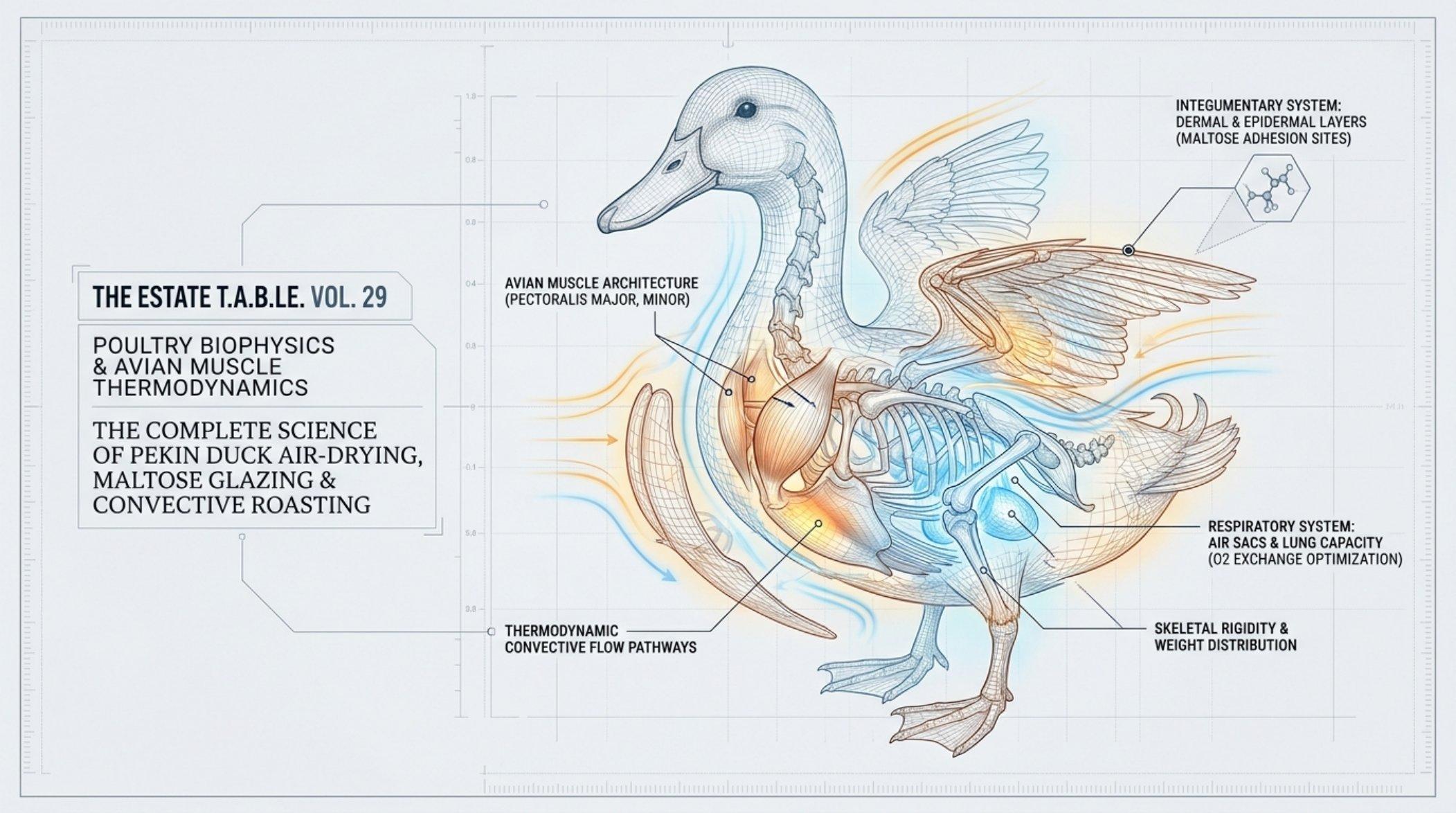
Crisp skin and juicy meat pull in opposite directions. This module follows the physics: what happens to myosin, collagen and actin as a bird heats, why surface water pins skin below boiling until it is dried away, how spatchcocking, dry-brining and a pinch of baking powder change the heat flow and the browning, and how Peking duck and duck confit turn the same ideas into full protocols. Every protocol sits inside the food-safety frame: the 165°F poultry standard, cold-chain and cooling limits, no rinsing raw poultry, the botulism risk of confit, and what processing-plant hold tables do and do not mean for a kitchen.
- Avian Muscle Types
- Protein Denaturation Ladder
- 165°F and the Food Code
- Skin Crisping Triad
- Cold Air-Drying
- Dry-Brining & Baking Powder
- Spatchcocking Geometry
- Peking Duck
- Duck Confit Safety
How many times have you followed a recipe to the letter and still not known why it worked, or why it didn't?
This module is the why. The guides, flashcards, quiz, audio, video and study materials are for members, with your progress saved to your account. Membership is $10 a month, or $80 a year ($40 less than paying monthly), plus any sales tax that applies. Cancel online, any time, in one click.
Not sure yet? Read the free module first: Modern Lipidology: The Full Picture on Heart Disease