The Pectin Chemistry of Jam and Marmalade Solidification
Why a jam sets: sugar, acid and pectin in balance, the 220°F rule, and the jar rules that keep it safe
Members only · $10 a month
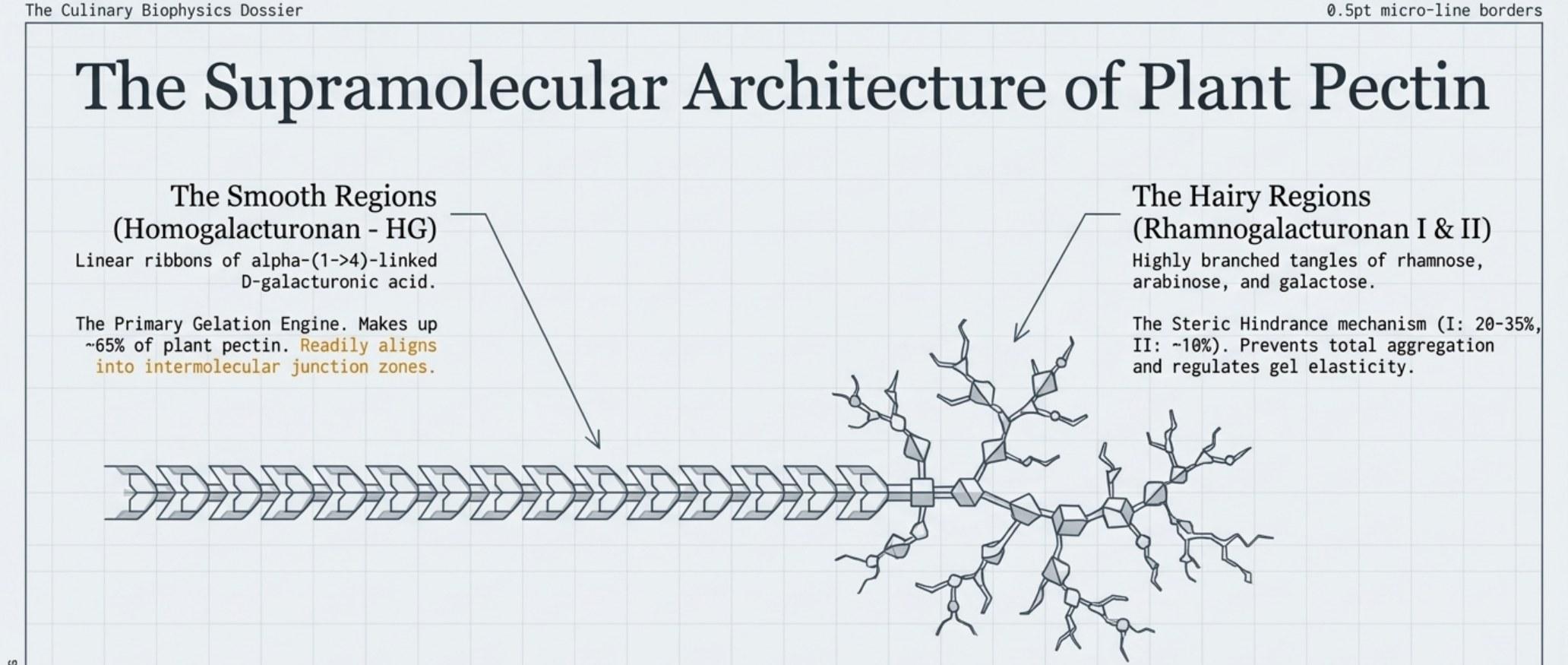
A jam is a gel built by three levers at once. Sugar strips water from the pectin chains, acid removes their electric charge, and a few tenths of a percent of pectin supplies the network. This module follows that chemistry from the pectin molecule to the preserving pan: high-methoxyl versus calcium-set low-methoxyl pectin, the four fruit groups, boiling point elevation and the altitude-adjusted jelling point, sucrose inversion and sugar crystals, Seville marmalade and Spanish membrillo, and the water activity, pH, headspace and processing rules that decide whether a jar is safe.
- Pectin Structure & Esterification
- High-Methoxyl Gelation
- Low-Methoxyl & Calcium Gels
- Fruit Pectin & Acid Groups
- The 220°F Jelling Point
- Sucrose Inversion & Crystals
- Seville Marmalade & Membrillo
- Water Activity & Safe Canning
How many times have you followed a recipe to the letter and still not known why it worked, or why it didn't?
This module is the why. The guides, flashcards, quiz, audio, video and study materials are for members, with your progress saved to your account. Membership is $10 a month, or $80 a year ($40 less than paying monthly), plus any sales tax that applies. Cancel online, any time, in one click.
Not sure yet? Read the free module first: Modern Lipidology: The Full Picture on Heart Disease