East Asian Koji Biotechnology
Enzymatic umami biochemistry and the craft of Aspergillus oryzae
How a domesticated fungus turns grain into flavor: the amylolytic and proteolytic cascades, shio koji's physical chemistry, solid-state cultivation in the koji muro, and the troubleshooting science behind the modern fermented kitchen.
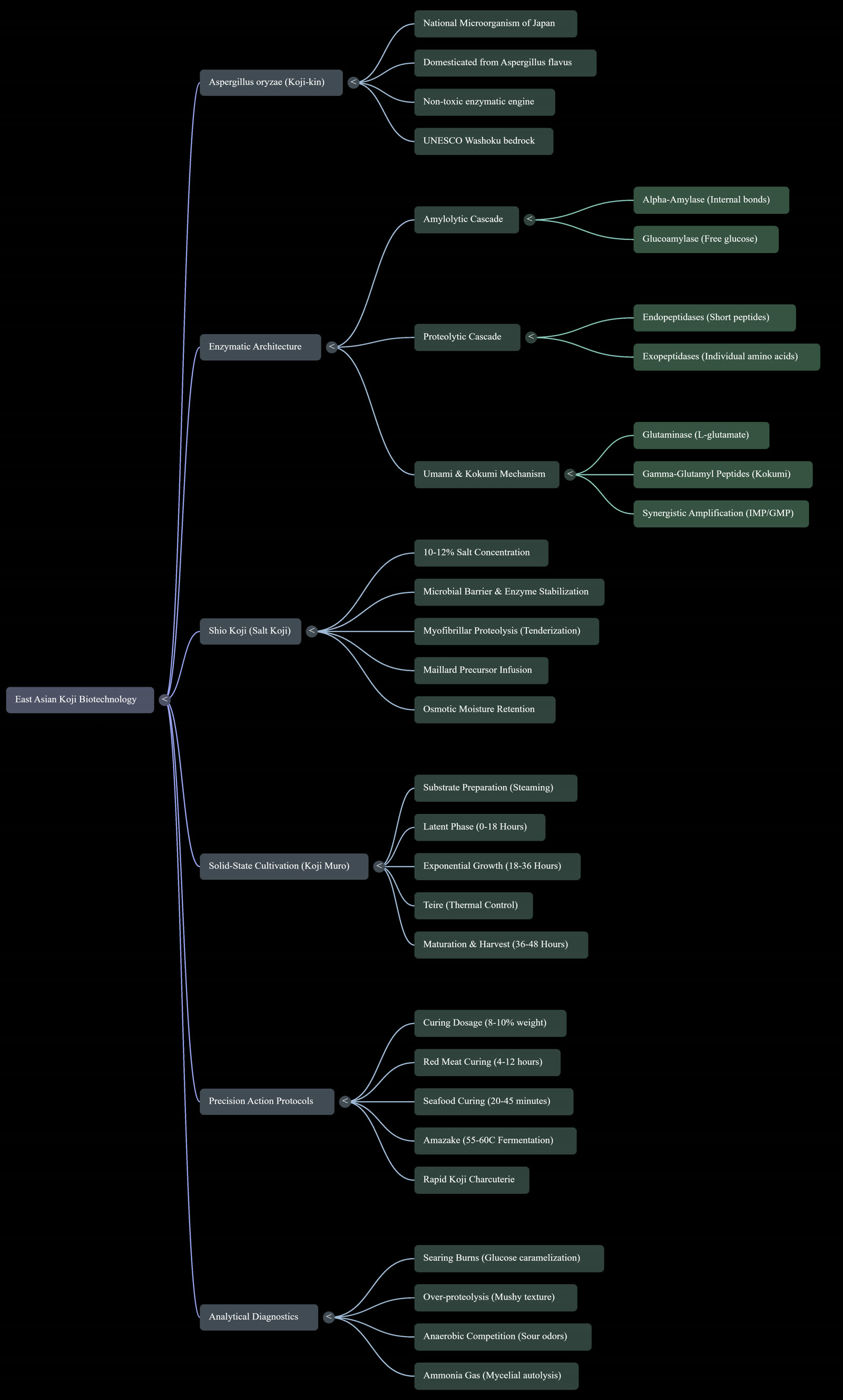
- Aspergillus oryzae (Koji-kin)
- Enzymatic Architecture
- Shio Koji (Salt Koji)
- Solid-State Cultivation (Koji Muro)
- Precision Action Protocols
- Analytical Diagnostics
Audio explainer · 37 min
How Koji Hacks Savory Flavor
Video overview · 10 min
East Asian Koji Biotech — video overview
- The Invisible Engine
- The Koji Masterclass
- The Magic of Koji
- Standard Operating Procedure
- Technical Performance Analysis
- Flashcards
The Invisible Engine
The molecular science of koji and the architecture of umami — how Aspergillus oryzae domestication turned a wild toxin-producer into washoku's enzymatic partner.
The Invisible Engine: The Molecular Science of Koji and the Architecture of Umami
The Hook: Beyond the Ingredient
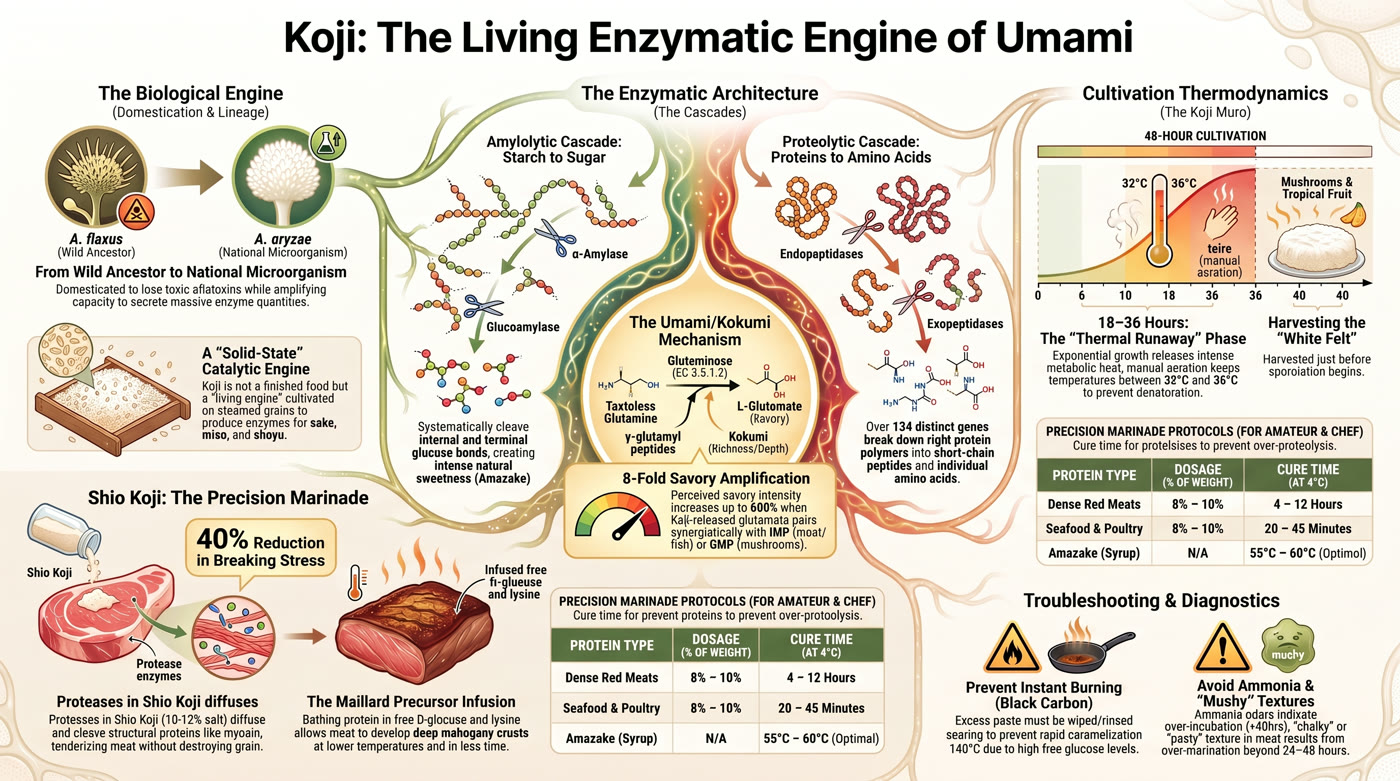
In the sphere of global biotechnology, few organisms have reconfigured human gastronomy as profoundly as Aspergillus oryzae, known colloquially as kōji-kin. Far more than a mere culinary mold, this filamentous fungus is a living, solid-state enzymatic catalytic engine. Formally designated as the "National Microorganism of Japan," koji serves as the fundamental biochemical bedrock of UNESCO-recognized Washoku (traditional Japanese cuisine). While the resulting staples—sake, miso, and shoyu—present a deceptive simplicity, they are the outputs of a sophisticated "enzymatic machinery" that dismantles complex macromolecules. By mastering this microorganism, ancient brewers and modern chefs alike harness a biological power capable of re-architecting the very chemical structure of food, unlocking flavor profiles and textures unreachable through thermal processing alone.
Takeaway 1: The Domestication of a Predator
The lineage of Aspergillus oryzae is a masterclass in ancient biotechnology and evolutionary guidance. Over two millennia, this organism was selectively domesticated from its wild ancestor, Aspergillus flavus. In a counter-intuitive evolutionary pivot, the fungus was bred to entirely lose the genetic clusters responsible for synthesizing lethal aflatoxins. In exchange for this lost toxicity, its metabolic energy was redirected to amplify its enzymatic output, turning a potentially dangerous predator into a hyper-productive tool for human consumption.
Nihon no kokkin: The "National Microorganism of Japan" represents a unique biological partnership where a once-toxic fungus was transformed into the foundational pillar of an entire culinary civilization.
Takeaway 2: The Biological "Swiss Army Knife"
To digest complex macromolecules externally, A. oryzae secretes a formidable multi-enzyme suite during its growth on steamed grains. This suite operates through two primary biochemical cascades:
- The Amylolytic Cascade: This process systematically converts starch into fermentable sugars. It utilizes Taka-Amylase A (an endo-enzyme) to cleave internal α-(1,4)-glucosidic bonds, rapidly reducing the viscosity of gelatinized starch and creating dextrins. Simultaneously, Glucoamylase (an exo-enzyme encoded by the glaB gene) attacks the terminal ends of these chains to liberate free glucose, providing the intense natural sweetness characteristic of amazake.
- The Proteolytic Cascade: This is the engine of savory depth. Koji is a genetic powerhouse, possessing over 65 distinct endopeptidase genes to cleave internal peptide bonds within dense protein polymers and 69 exopeptidase genes to trim individual amino acids from the ends of those fragments. This dual action systematically dismantles rigid protein structures into flavor-dense components.
Takeaway 3: The 8x Umami Force Multiplier
The primary driver of "savory" intensity in fermented foods is the enzyme Glutaminase. This enzyme performs a critical biochemical conversion, hydrolyzing tasteless L-glutamine into free L-glutamate, the primary ligand for the human T1R1/T1R3 taste receptors.
The true "invisible engine" of koji biotechnology is Synergistic Umami Amplification. When the free glutamate released by koji is paired with dietary nucleotides like inosine monophosphate (IMP, found in meat) or guanosine monophosphate (GMP, found in mushrooms), it triggers an allosteric shift on the T1R1/T1R3 receptors. This conformational change creates an exponential, 8-fold increase in perceived savory intensity, effectively "tricking" the brain into a profound sensory experience that far exceeds the sum of its parts.
Takeaway 4: "Kokumi" – The Secret of Mouth-Coating Richness
Beyond the five basic tastes lies Kokumi, a sensory sensation of heartiness, roundness, and "mouth-fullness." Koji enzymes facilitate the synthesis of specific γ-glutamyl peptides that interact with calcium-sensing receptors (CaSR) on the tongue. While umami provides the "hit" of savoriness, Kokumi provides the lingering depth and mouth-coating richness that defines high-quality miso or aged shoyu. It is the molecular hallmark of a successful fermentation, providing a sensory thickness to liquids that would otherwise feel thin on the palate.
Takeaway 5: Shio Koji: The Ultimate Non-Mechanical Tenderizer
Shio Koji—a ferment of rice koji, water, and 10–12% NaCl—is a precision tool for protein modification. It transforms meat through several simultaneous biochemical actions:
1. Myofibrillar Proteolysis: Proteases diffuse into animal tissue, cleaving structural proteins including titin, myosin heavy chains, and nebulin. This reduces meat "breaking stress" by up to 40%, creating tenderness without destroying the grain.
2. Maillard Precursor Infusion: The marinade bathes the protein in free glucose and amino acids (like Lysine). These are the essential reactants for non-enzymatic browning, allowing meat to develop deep mahogany crusts at lower temperatures.
3. Osmotic Moisture Retention: Mild salinity causes myofilament swelling, allowing meat to entrap water and maintain juiciness through high-heat searing.
4. Enzyme Stabilization: Crucially, the 10–12% salt content serves to stabilize neutral and alkaline proteases against thermal denaturation and autolysis, ensuring the enzymes remain functional during the early stages of cooking.
Takeaway 6: The High-Stakes Drama of the "Koji Muro"
Cultivating koji is a 48-hour exercise in biological climate control within a dedicated incubation chamber called a muro.
- 18–36 Hours (Thermal Runaway): As the mold grows, its respiration generates intense metabolic heat. If substrate temperatures spike above 45°C (113°F), the fungus will kill itself and denature its own enzymes.
- The Intervention (Teire): To prevent this, chefs perform teire—manual aeration and turning—to disperse heat and oxygenate the core.
- The Indicator of Success: A successful harvest is marked by a dense, velvety white mycelium that binds the grains into a fragrant cake resembling white felt. The olfactory profile should be a complex blend of fresh mushrooms, toasted chestnuts, and tropical fruit.
Practical Wisdom: Precision Action Protocols
To harness koji without causing a culinary disaster, the modern cook must treat it as a precision laboratory reagent:
- Mitigating Maillard Over-Acceleration: Because koji generates high concentrations of free glucose, it will caramelize and burn at temperatures as low as 140°C. Always gently wipe or rinse off excess surface paste before searing. The enzymatic work is already complete inside the tissue.
- Adhering to Curing Windows: For optimal results, apply Shio Koji at 8% to 10% of the total protein weight. For dense red meats (beef, pork), cure for only 4 to 12 hours; proteases penetrate approximately 2–4mm every 6 hours. For delicate seafood or poultry, limit exposure to 20 to 45 minutes to prevent over-proteolysis and mushy textures.
- Autolysis Prevention: If koji smells of pungent ammonia, it has been left at high temperatures (>38°C) past the 48-hour mark. This indicates the mold has begun autolyzing its own proteins and deaminating amino acids.
Conclusion: The Future of Ancient Tech
The applications of A. oryzae are currently transcending traditional Japanese crocks. Innovations in "Rapid Koji Charcuterie" are now using koji flour and Shio Koji to compress traditional months-long curing timelines into a mere 48–72 hours by kick-starting internal proteolysis. This ancient biotechnology provides a pathway to more efficient, sustainable, and flavor-dense food production. As we move further into the era of molecular gastronomy, we must consider: what other "unseen threads" connect these ancient fermentation traditions to the future of our global food system? The "National Microorganism" may be the oldest technology we have for the newest culinary frontiers.
The Koji Masterclass
A practical handbook to enzymatic cooking — applying amylases and proteases in the kitchen, from marinades to rapid cures.
The Koji Masterclass: A Practical Handbook to Enzymatic Cooking
Welcome to the vanguard of culinary biotechnology. This handbook is designed to bridge the gap between artisanal tradition and molecular precision. By mastering Aspergillus oryzae, you are not merely cooking; you are directing a sophisticated biological symphony that transforms the very architecture of food.
1. Meet Your Microbe: The Story of Aspergillus oryzae
At the heart of East Asian biotechnology is Aspergillus oryzae, a filamentous fungus formally designated as the "National Microorganism of Japan" (Nihon no kokkin). While many molds represent a threat to food safety, A. oryzae (known as kōji-kin) is a triumph of ancient domestication.
Over two millennia of selective cultivation, this fungus was transformed from its wild ancestor, Aspergillus flavus, into a high-performance "enzymatic catalytic engine." Through this domestication, the organism completely lost the genetic clusters required to produce toxic aflatoxins. This evolutionary shift makes it the safe, foundational bedrock of Washoku (Japanese cuisine), providing the biochemical spark for sake, miso, and shoyu.
Key Concept: Solid-State Fermentation (SSF) Koji is a product of Solid-State Fermentation. In this process, Aspergillus oryzae is grown on a moist, solid substrate—typically steamed rice, barley, or soybeans—allowing the fungal mycelium to physically penetrate the grain and release a massive payload of enzymes to digest the starch-protein matrix from within.
The transition from a wild spore to a culinary powerhouse is defined by the fungus's biological identity: its ability to secrete a specialized toolkit of enzymes designed to dismantle complex food molecules into flavor-packed building blocks.
2. The Biological Toolkit: Understanding the Enzymatic Cascade
When koji spores (tane-koji) germinate, they send out thread-like hyphae that secrete two primary "suites" of enzymes. These act as biological scissors, targeting specific molecular bonds to liberate sweetness and savory depth.
The Enzyme Breakdown
| Enzyme Group | Primary Target (Substrate) | Culinary Result (Flavor/Texture) |
|---|---|---|
| Amylolytic Cascade<br>α-Amylase (Taka-Amylase A, EC 3.2.1.1) & Glucoamylase (EC 3.2.1.3, encoded by glaB) | Internal α-(1,4)-glucosidic bonds and terminal non-reducing ends of starches. | Converts starch into D-glucose, creating intense natural sweetness and fuel for fermentation. |
| Proteolytic & Peptidase Cascade<br>(65 endopeptidase genes & 69 exopeptidase genes) | Dense protein polymers (Soy glycinin, bovine actin/myosin). | Cleaves rigid protein fibrils into short peptides and free amino acids, resulting in profound savory depth. |
The Umami/Kokumi Mechanism
The definitive "magic" of koji lies in Glutaminase (EC 3.5.1.2). This enzyme hydrolyzes tasteless L-glutamine into L-glutamate, the primary ligand for our umami taste receptors (T1R1/T1R3).
True mastery involves understanding Synergistic Umami Amplification. When the glutamate produced by koji meets dietary nucleotides (like IMP in meat or GMP in mushrooms), it triggers an allosteric conformational shift on the T1R1/T1R3 receptor. This results in an 8-fold increase in perceived savory intensity. Furthermore, the synthesis of γ-glutamyl peptides activates calcium-sensing receptors (CaSR), creating kokumi—a sensory sensation of mouth-coating richness and lingering depth.
To harness these microscopic tools, the practitioner must first learn to build the specific macroscopic environment needed to grow them.
3. The Koji Muro: Mastering the Biological Climate
Cultivating koji requires an incubation chamber called a muro. Success is a matter of managing the Thermodynamics of Growth over a precise 48-hour cycle.
1. Preparation: Rice is polished and soaked to a 30%–35% moisture content, then steamed (not boiled) to gelatinize the starch while maintaining distinct grain boundaries.
2. Inoculation (0–18 hrs): Spores are applied at 30°C (86°F) with a 90% Relative Humidity (RH). This is the latent phase where the fungus hydrates and begins germ-tube formation.
3. Thermal Runaway (18–36 hrs): As the mold enters exponential growth, it initiates exothermic bio-combustion, releasing tremendous metabolic heat. If the substrate exceeds 45°C, the fungus will die. The chef must perform teire—manual aeration—to disperse heat and maintain the core between 32°C and 36°C.
4. Harvest (36–48 hrs): The process concludes when a dense, "white felt" of mycelium binds the grains. It should possess a sensory profile of fresh mushrooms, tropical fruit, and toasted chestnuts.
Once harvested, these enzymes can be stabilized and applied to proteins through the medium of Shio Koji.
4. Shio Koji: The Science of the "Magic" Marinade
Shio Koji is a condiment of rice koji, water, and 10%–12% NaCl. This concentration creates a critical Microbial Barrier (Water Activity aw≈0.85−0.88) that suppresses pathogens while stabilizing the proteases against denaturation.
The Four Kinetics of Transformation
- Tenderization: Proteases diffuse into muscle tissue, cleaving structural proteins like titin and nebulin. This reduces the meat’s physical "breaking stress" by 40%.
- Maillard Precursor Infusion: The marinade bathes the protein in D-glucose and amino acids, specifically Lysine. This allows for a deep mahogany crust and complex heterocyclic aromas to form at lower temperatures.
- Osmotic Moisture Retention: Through myofilament swelling, salt and enzymes relax muscle filament spacing, allowing the meat to chemically entrap water and stay juicy through high-heat cooking.
Precision Protocol: Dosing and Timing
- Dosage: Apply at exactly 8% to 10% of the total protein weight.
- Red Meats (Beef/Pork): Cure for 4 to 12 hours at 4°C. Proteases penetrate 2–4mm per 6 hours.
- Seafood & Poultry: Cure for only 20 to 45 minutes. Over-exposure leads to mushy textures.
5. The Diagnostic Lab: Solving Common Koji Mistakes
Working with live enzymatic catalysts requires a diagnostic mindset. Use the table below to identify the scientific root cause and the governing principle of control.
| Issue | Root Scientific Cause | The Corrective Remedy |
|---|---|---|
| Instant Burning/Charring | Excess surface glucose caramelizes rapidly at 140°C. | Principle of Surface Concentration: Gently wipe or rinse paste off before searing; the internal infusion is already complete. |
| Mushy or Pasty Texture | Over-proteolysis: Endopeptidases have disintegrated the myofibrillar scaffolding. | Principle of Kinetic Control: Reduce marination time and strictly maintain refrigeration at 4°C. |
| Sour or Off-Odors (Incubation) | High moisture/low air allowed anaerobic lactic acid bacteria or yeast to outcompete the mold. | Principle of Microbial Competition: Ensure grains are steamed, not boiled, and improve ventilation to favor the aerobic fungus. |
| Ammonia Smells | Autolysis: Mature koji left at high heat (>38°C) begins deaminating amino acids. | Principle of Metabolic Timing: Harvest strictly at 48 hours and prevent late-stage heat spikes. |
6. Quick-Reference Summary for the Aspiring Fermenter
To master the art of koji, adhere to these three Golden Rules:
1. Respect the Thermal Limits: Never exceed 45°C during growth. For enzymatic syrups (Amazake), hold at exactly 55°C–60°C to optimize glucoamylase while inactivating bacteria.
2. Manage Moisture Precisely: Aim for 30%–35% substrate moisture; excessive wetness invites bacterial spoilage, while dryness halts fungal respiration.
3. Control the Dose: Maintain the 8%–10% weight ratio for Shio Koji to balance flavor infusion with the structural integrity of the protein.
By controlling these variables, you move beyond simple cooking and into the realm of biological design.
The Magic of Koji
A learner's guide to nature's flavor engine — the biology of the mold, the cascades it runs, and why ancient biotechnology still outperforms.
The Magic of Koji: A Learner’s Guide to Nature’s Flavor Engine
1. Meet Your Microscopic Hero: Aspergillus Oryzae
Welcome to the vanguard of culinary science. As a student of molecular gastronomy, you are moving beyond mere cooking and into the realm of biological orchestration. Our central protagonist is Aspergillus oryzae, known affectionately in Japan as Koji-kin. This filamentous fungus is far more than a simple mold; it is a "solid-state enzymatic catalytic engine" that serves as the bedrock of Washoku (traditional Japanese cuisine). Its importance is so profound that it holds the title of the "National Microorganism of Japan" (Nihon no kokkin).
The story of A. oryzae is a masterclass in ancient biotechnology. Over 2,000 years, it was selectively domesticated from its wild ancestor, Aspergillus flavus. In this evolutionary trade-off, the organism completely lost the genetic clusters responsible for producing toxic aflatoxins. In their place, the mold underwent a massive amplification of its enzyme-secreting capabilities. This domestication has rendered it a safe, supercharged tool for dismantling complex macromolecules into the building blocks of flavor.
Quick Facts: The Koji Legacy
- Domestication History: Cultivated for 2,000+ years; transitioned from toxic ancestor to culinary workhorse.
- National Status: Officially designated the "National Microorganism of Japan."
- Culinary Resume: The fundamental catalyst for sake, miso, shoyu (soy sauce), and mirin.
- Biochemical Role: A solid-state engine that converts starches and proteins into sugars and amino acids.
While the history of this mold is rooted in tradition, its physical growth is a precise exercise in thermodynamics and moisture control.
2. The Life Cycle: From Spore to Fragrant Cake
To harness the power of koji, we utilize Solid-State Cultivation (SSF). Unlike liquid fermentations, the mold grows on the surface and within the matrix of solid, steamed grains. The preparation of the substrate is critical: grains must be steamed, never boiled. Steaming gelatinizes the starch while maintaining distinct, non-sticky individual grain boundaries. This physical structure is essential because it creates the interstitial air pockets required for the mold’s respiration and hyphal penetration.
The 48-hour journey within the koji muro (incubation chamber) is a delicate balance of biology and heat management. As the mold grows, it enters "thermal runaway," where its own metabolic heat can spike above 45°C, potentially killing the organism. Chefs mitigate this through Teire—manual aeration and turning of the grains—to disperse heat and oxygenate the core, maintaining a narrow window of 30°C–36°C.
The 48-Hour Transformation
| Timeframe | Biological Activity | The Chef’s Role |
|---|---|---|
| 0–18 Hours (Latent Phase) | Spores hydrate and germinate; mycelium forms initial germ tubes across the grain surface. | Soak rice to 30-35% moisture; steam for distinct grain boundaries; inoculate with tane-koji at 30°C. |
| 18–36 Hours (Exponential Growth) | Surge in respiration; "exothermic bio-combustion" releases intense heat. | Teire: Manually turn grains to disperse heat and oxygenate, preventing spikes above 45°C. |
| 36–48 Hours (Enzyme Maturation) | Dense white mycelium binds grains into a felt-like cake smelling of mushrooms and chestnuts. | Harvest immediately before sporulation (signified by a yellow-green color) to lock in peak potency. |
While the mycelium visibly binds the grains into a white cake, a hidden enzymatic "kitchen" is dismantling the grain's architecture at a molecular level.
3. The Enzymatic Architecture: How Koji Dismantles Food
The power of koji lies in its hyphae—microscopic, root-like structures that punch into the grain's starch-protein matrix. Because the mold cannot ingest complex molecules, it secretes a formidable suite of hydrolytic enzymes to digest food externally. We categorize these into two primary biochemical cascades.
The Two Major Enzymatic Cascades
| The Amylolytic Cascade (Starch → Glucose) | The Proteolytic Cascade (Protein → Umami) |
|---|---|
| Key Enzymes: Taka-Amylase A (EC 3.2.1.1) and Glucoamylase (encoded by glaB). | Key Enzymes: 65 Endopeptidases and 69 Exopeptidases (Aminopeptidases & Carboxypeptidases). |
| The Action: Taka-Amylase A cleaves internal bonds to reduce starch viscosity; Glucoamylase trims terminal ends to liberate free β-D-glucose. | The Action: Endopeptidases break rigid protein fibrils into short chains; Exopeptidases systematically trim individual amino acids from the ends. |
| Flavor Result: Intense natural sweetness and fermentable sugars (e.g., Amazake). | Flavor Result: Savory depth, tenderness, and the release of free amino acids like L-glutamate. |
This breakdown is not merely about simplification; it is the foundation for the most coveted sensations in the culinary world: Umami and Kokumi.
4. The Science of Savory: Umami and Kokumi
The star of the proteolytic cascade is Glutaminase (EC 3.5.1.2). This enzyme hydrolyzes tasteless L-glutamine into L-glutamate, the primary ligand that binds to our T1R1/T1R3 umami taste receptors. However, koji provides more than just savoriness; it creates Kokumi. This sensation of "mouth-coating richness" is triggered by γ-glutamyl peptides that activate calcium-sensing receptors (CaSR) on the tongue.
To achieve true mastery, the biotech chef must understand how to amplify these signals through molecular synergy.
Pro-Tip: The Umami Multiplier
When the free glutamate released by koji is paired with dietary nucleotides like IMP (found in meat/fish) or GMP (found in mushrooms), it triggers an allosteric conformational shift on the T1R1/T1R3 receptors. This physical change in the receptor's shape produces a staggering 8-fold increase in perceived savory intensity.
This microscopic chemistry finds its most practical application in Shio Koji, a tool that functions as a non-mechanical protein-modification system.
5. Shio Koji: The Ultimate Culinary Tool
Shio Koji is a fermented "gruel" of rice koji, water, and 10%–12% salt. The salt serves as a microbial barrier and stabilizes the enzymes against autolysis. In terms of thermodynamics, while these enzymes reach peak performance at 40°C–50°C, they remain functional at 4°C (refrigeration). Think of cold-curing as the enzymes "idling"—they work slower for safety, but with high precision.
The Four Pillars of Shio Koji Impact:
1. Myofibrillar Proteolysis: Proteases diffuse into muscle tissue, cleaving specific proteins: titin, nebulin, and myosin heavy chains. This reduces "breaking stress" by up to 40%.
2. Maillard Precursor Infusion: The meat is bathed in free D-glucose and amino acids (like Lysine), providing the essential reactants for browning even at lower pan temperatures.
3. Osmotic Moisture Retention: Mild salinity relaxes muscle filaments (myofilament swelling), allowing the meat to chemically entrap water and stay juicy.
4. Enzyme Stabilization: The 10%-12% NaCl concentration ensures the proteases remain active and don't denature during the curing process.
The Shio Koji Laws
1. Precision Dosage: Apply shio koji at exactly 8% to 10% of the total protein weight.
2. Red Meats (Beef, Pork): Cure for 4 to 12 hours. Enzymes penetrate approximately 2–4mm every 6 hours.
3. Seafood & Poultry: Cure for only 20 to 45 minutes. Delicate proteins are susceptible to "over-proteolysis," which will destroy the grain and create a mushy texture.
6. The Master’s Troubleshooting Guide
Even in a controlled lab-kitchen, working with living enzymes requires diagnostic skills. Use this table to self-correct your fermentations and cures.
| Problem | Likely Cause | Remedy |
|---|---|---|
| Meat burns to black carbon instantly | Free glucose on the surface caramelizes and burns at temperatures as low as 140°C. | Gently wipe or rinse off the paste before searing. The internal enzymatic work is already complete. |
| Meat is mushy or pasty | Over-proteolysis from excessive marination time or curing at room temperature. | Adhere to the Shio Koji Laws; always cure delicate proteins at 4°C (fridge). |
| Sour or "off" odors during incubation | Excess surface moisture or poor ventilation allowed lactic acid bacteria to outcompete the mold. | Ensure rice is steamed, not boiled, to maintain "non-sticky" boundaries for airflow. |
| Pungent ammonia smell | Koji was left past 48 hours or above 38°C; the mold is autolyzing its own proteins. | Harvest immediately when it smells of fruit/mushrooms and reaches the 48-hour maturity mark. |
By mastering Aspergillus oryzae, you have graduated from a cook to a biological architect. You are no longer just applying heat; you are directing a molecular symphony that transforms the very nature of food.
Standard Operating Procedure
Precision solid-state fermentation and enzymatic curing protocols — the muro environment, teire discipline, and harvest criteria.
Standard Operating Procedure: Precision Solid-State Fermentation & Enzymatic Curing Protocols
1. The Biological Foundation of Aspergillus Oryzae
In the professional culinary theatre, Aspergillus oryzae (koji-kin) must be managed not as a mere ingredient, but as a living "solid-state enzymatic catalytic engine." Formally designated as Nihon no kokkin (the National Microorganism of Japan), this filamentous fungus serves as the biological bedrock of UNESCO-recognized traditional Japanese cuisine. For the modern culinary biotechnologist, understanding its domestication lineage from the wild Aspergillus flavus is a non-negotiable safety requirement. Over a two-millennia domestication period, A. oryzae has undergone specific genetic divergence, completely losing the gene clusters responsible for the synthesis of toxic aflatoxins. This selective evolution has simultaneously amplified its capacity to synthesize and secrete an unparalleled suite of hydrolytic enzymes. By maintaining strict professional cultivation standards, we harness this metabolic potency to transform raw substrates into high-value flavor precursors without the risk of pathogenic byproducts. This biological foundation enables everything from traditional shoyu and miso to contemporary innovations in koji-accelerated dry-aging and Shio Koji systems. To leverage this organism effectively, we must first master the specific biochemical tools it deploys during its growth phase.
2. The Enzymatic Architecture of Solid-State Fermentation (SSF)
The primary strategic advantage of Aspergillus oryzae lies in its ability to perform "external digestion" through the secretion of a complex suite of extracellular enzymes. As the mycelial hyphae penetrate the starch-protein matrix of the grain, they release catalysts that deconstruct complex macromolecules into flavor-active, low-molecular-weight compounds. The organism's genome is remarkably specialized, containing over 65 distinct endopeptidase genes and 69 exopeptidase genes, allowing for a level of proteolytic precision that mechanical or chemical processes cannot replicate.
The Amylolytic and Proteolytic Cascades
| Enzyme Category | Specific Catalyst | EC Number | Biochemical Action | Culinary Result |
|---|---|---|---|---|
| Amylolytic | α-Amylase (Taka-Amylase A) | EC 3.2.1.1 | Cleaves internal α-(1,4)-glucosidic bonds in starch. | Rapidly reduces viscosity; creates dextrins. |
| Amylolytic | Glucoamylase (glaB) | EC 3.2.1.3 | Liberates free β-D-glucose from terminal ends. | Provides intense natural sweetness; fuels yeast. |
| Proteolytic | Endopeptidases (Acid, Neutral, Alkaline) | N/A | Cleaves internal peptide bonds within dense protein polymers. | Breaks rigid protein fibrils into short-chain oligopeptides. |
| Proteolytic | Exopeptidases (Aminopeptidases & Carboxypeptidases) | N/A | Trims individual amino acids from N- and C-terminus. | Releases free amino acids for flavor and Maillard reactions. |
| Umami Focus | Glutaminase | EC 3.5.1.2 | Hydrolyzes L-glutamine into free L-glutamate. | Primary umami ligand; triggers T1R1/T1R3 receptors. |
The "So What" of this enzymatic engine is found in the synthesis of γ-glutamyl peptides, which activate the calcium-sensing receptors (CaSR) on the human palate to create Kokumi—a sensation of mouth-coating richness and roundness. To maximize the operational impact of these enzymes, culinary professionals must exploit synergistic umami amplification. Pairing the glutamate produced by koji with meat/fish (Inosine Monophosphate/IMP) or mushrooms (Guanosine Monophosphate/GMP) triggers an allosteric conformational shift on the taste receptors, resulting in an exponential 8-fold increase in savory intensity. This microscopic enzymatic activity is entirely contingent upon the physical environment provided during cultivation.
3. Procedural Milestones in Solid-State Cultivation
Koji cultivation is a rigorous exercise in biological climate control, traditionally executed within a Koji Muro (incubation chamber). The process is governed by the thermodynamics of fungal respiration, necessitating precise management of moisture, oxygen, and metabolic heat.
- Phase I: Substrate Preparation & Inoculation (0–18 Hours): Professionals must soak polished grains to a target moisture content of 30%–35%. Requirement: Steam the grain; do not boil. Steaming gelatinizes starches while maintaining distinct grain boundaries, which is critical for hyphal penetration. Maintain the Latent Phase at 30°C and 90% relative humidity to facilitate spore hydration and germination.
- Phase II: Thermal Runaway & Teire (18–36 Hours): As the mold enters exponential growth, it engages in "exothermic bio-combustion." If left unchecked, metabolic heat will spike above the 45°C thermal-kill threshold, denaturing the enzymes. Operational Directive: Execute teire (manual aeration and turning) to disperse heat and oxygenate the core, maintaining a substrate temperature between 32°C and 36°C.
- Phase III: Maturation & Harvest (36–48 Hours): Peak potency is signaled by a dense, white, felt-like mycelium and aromas of tropical fruit and toasted chestnuts. Warning: The "Ammonia Phase" occurs if temperatures exceed 38°C past the 48-hour mark, as the mold begins to autolyze its own mycelial proteins. Harvest must occur immediately before the grains transition to a yellow-green color (sporulation) to lock in enzyme concentrations.
Once the raw koji is harvested, it serves as the high-potency substrate for secondary functional applications, most notably Shio Koji marinades.
4. Technical Protocol for Shio Koji (Salt Koji) Marinades
Shio Koji represents a sophisticated non-mechanical protein modification system. Its effectiveness is rooted in its dual role as a microbial stabilizer and a delivery vehicle for enzymatic diffusion. The standard formulation utilizes 10%–12% NaCl by weight, which establishes a critical microbial barrier with a water activity (aw) of approximately 0.85–0.88. This specific aw creates a hurdle-technology barrier that suppresses pathogens and spoilage organisms, allowing for extended enzymatic contact time without microbial risk.
The Kinetics of Protein Modification The kinetic window for Shio Koji is optimized at a pH of 5.0 and a temperature range of 40°C–50°C, though it remains operationally functional at refrigeration temperatures (4°C).
- Myofibrillar Proteolysis: Proteases cleave structural proteins such as titin, nebulin, and myosin heavy chains, achieving a 40% reduction in "breaking stress" (toughness) while maintaining the integrity of the meat's grain.
- Maillard Precursor Infusion: The marinade bathes the protein in free D-glucose and amino acids (notably Lysine). These are the essential reactants for non-enzymatic browning, enabling deep mahogany crust development at lower temperatures.
- Osmotic Moisture Retention: Through equilibrium osmotic pressure, Shio Koji induces "myofilament swelling." This allows the muscle tissue to chemically entrap free water, ensuring juiciness is maintained even through high-heat searing.
Achieving these benchmarks in a commercial setting requires strict adherence to standardized dosing and timing protocols.
5. Precision Application & Curing Protocols
To prevent over-proteolysis and ensure consistency across a professional culinary line, standardized dosing is mandatory.
- Standard Dosage: Apply Shio Koji at exactly 8% to 10% of total protein weight.
- Dense Red Meats (Beef/Pork): Cure for 4–12 hours at 4°C. Note the critical path: proteases penetrate approximately 2–4mm every 6 hours.
- Delicate Proteins (Seafood/Poultry): Limit exposure to 20–45 minutes. Prolonged curing will result in a mushy, undesirable texture due to excessive myofibrillar collapse.
Advanced Secondary Applications
- Amazake Fermentation: Hold rice koji and water at 55°C–60°C to optimize glucoamylase kinetics while inactivating yeast/bacteria. This produces a syrup with up to 20% reducing sugars.
- Rapid Koji Charcuterie: Coating whole muscle cuts in koji flour establishes a beneficial fungal barrier and kick-starts internal proteolysis, accelerating traditional months-long curing cycles into 48–72 hour windows.
Maintaining these protocols requires a robust diagnostic framework to troubleshoot environmental and procedural variables.
6. Troubleshooting and Analytical Diagnostics
The final safeguard for quality control and diner safety is the rigorous monitoring of sensory and environmental indicators.
Diagnostic Matrix
| Observed Issue | Biochemical Root Cause | Corrective Action |
|---|---|---|
| Searing Protein Burns | Surface glucose burns at 140°C. | Wipe or rinse off excess koji paste before cooking; internal infusion is already complete. |
| Mushy/Chalky Texture | Over-marination or warm temperatures (>4°C) causing total myofibrillar collapse. | Reduce marination time; strictly maintain 4°C during curing. |
| Sour/Off-Odors | Excess moisture or poor ventilation allowing anaerobic bacteria/yeast to outcompete mold. | Ensure grains are steamed (not boiled) and improve airflow in the Muro. |
| Ammonia Odors | Mycelial autolysis and deamination of amino acids due to over-incubation (>48h). | Harvest immediately when white mycelium reaches peak; do not exceed 38°C at maturation. |
Final Quality Standard: The "Golden Rule" of harvest is to lock in enzyme potency at the point of maximum mycelial density, precisely before the transition to yellow-green sporulation. The mastery of Aspergillus oryzae is the ultimate intersection of ancient tradition and modern biotechnology, granting the professional consultant and chef total control over the molecular transformation of food.
Technical Performance Analysis
Enzymatic kinetics and structural modification in precision koji-aged meats — tenderization data, dosage curves, and failure analysis.
Technical Performance Analysis: Enzymatic Kinetics and Structural Modification in Precision Koji-Aged Meats
1. Strategic Overview of Aspergillus oryzae as a Biocatalytic Engine
In the discipline of modern culinary biotechnology, Aspergillus oryzae (koji-kin) is classified not as a static ingredient, but as a sophisticated, living, solid-state enzymatic catalytic engine. This filamentous fungus serves as the primary biochemical driver for precision protein and starch modification. By utilizing A. oryzae in a solid-state fermentation (SSF) environment, food engineers can leverage its high-performance ability to secrete a formidable multi-enzyme suite, essential for the targeted disassembly of complex macromolecules into functional flavor precursors.
The strategic utility of A. oryzae is the byproduct of a deliberate evolutionary transition from its wild ancestor, Aspergillus flavus. Through millennia of domestication, the organism has undergone critical genetic refinement, resulting in the total loss of the genetic clusters required for toxic aflatoxin production. Concurrently, the genome has amplified its capacity for synthesizing hydrolytic enzymes. This unique lineage is the fundamental prerequisite for safe, high-performance meat aging, providing a controlled environment for enzymatic activity that bypasses the pathogenic risks inherent in wild microbial colonization. This domesticated biological foundation directly dictates the kinetic potential of the specific enzymatic architecture used to modify animal tissue.
2. The Proteolytic & Peptidase Cascade: Mechanisms of Protein Degradation
Mastery of the "Proteolytic Cascade" is a strategic necessity for achieving specific textural and organoleptic outcomes in animal substrates. In meat applications, the engineering objective is the transformation of dense, rigid protein polymers into smaller, flavor-available molecules through a synchronized dual-action enzymatic workflow.
Comparative Analysis: Endopeptidases vs. Exopeptidases
The efficiency of koji-based aging relies on the precise balance between two enzymatic classes:
- Endopeptidases (Acid, Neutral, and Alkaline): The A. oryzae genome expresses over 65 distinct endopeptidase genes. These enzymes function by cleaving internal peptide bonds within large protein polymers—such as bovine actin and myosin—breaking rigid fibrils into short-chain oligopeptides.
- Exopeptidases (Aminopeptidases & Carboxypeptidases): Complementing the internal cleavage, more than 69 exopeptidase genes systematically "trim" individual amino acids from the N-terminus and C-terminus of these peptide fragments.
[Engineering Note: The "So What?" of Degradation] This dual-action cascade is the only mechanism capable of transforming dense protein polymers into the free amino acids required for superior organoleptic profiles. While endopeptidases facilitate the structural disintegration of the muscle matrix, exopeptidases liberate the specific chemical ligands necessary for intense flavor perception. Without this coordinated disassembly, the substrate remains structurally resilient and chemically inert.
This molecular breakdown of proteins directly dictates the subsequent structural changes observed in the muscle tissue matrix.
3. Structural Modification and Myofibrillar Kinetics
Precision meat aging utilizes enzymatic diffusion as a method of non-mechanical tenderization. Unlike physical interventions that can compromise grain integrity, enzymatic activity alters the physical matrix from within. This process is highly kinetic, relying on the diffusion of proteases to modify the primary structural proteins of the animal muscle.
Impact on Muscle Architecture
Protease activity specifically targets the "scaffolding" proteins that maintain muscle tension:
- Titin and Nebulin: These proteins are cleaved, reducing the overall structural tension of the muscle fiber.
- Myosin Heavy Chains: The degradation of these primary contractile proteins further weakens the internal support of the muscle tissue.
[Consultant Insight: Physical Chemistry & Performance]
- Breaking Stress: Targeted enzymatic action has been shown to reduce the meat "breaking stress" by up to 40% without destroying the natural grain.
- Stability & Swelling: Utilizing Shio Koji (formulated at 10%–12% NaCl, achieving a water activity aw≈0.85−0.88) provides a dual benefit. The salt suppresses spoilage while inducing "myofilament swelling." This relaxes muscle filament spacing, allowing the meat to chemically entrap free water.
This structural tenderization is the primary catalyst for the liberation of chemical flavor ligands.
4. Umami Biochemistry and Kokumi Synthesis
Strategic biochemical flavor enhancement moves beyond traditional seasoning to the direct activation of molecular taste receptors. Through the action of koji enzymes, tasteless precursors inherent in the meat are converted into potent savory compounds.
The Glutaminase Mechanism and Unified Workflow
The central catalyst in this process is Glutaminase (EC 3.5.1.2), which hydrolyzes L-glutamine—a tasteless amino acid—into free L-glutamate, the primary ligand for the human umami receptor (T1R1/T1R3).
[Engineering Note: Synergistic Umami & Kokumi Synthesis]
- Synergistic Amplification: When liberated glutamate pairs with meat-derived inosine monophosphate (IMP), an allosteric conformational shift occurs on the T1R1/T1R3 receptor, resulting in a perceived 8-fold increase in savory intensity.
- Kokumi Integration: Koji enzymes simultaneously synthesize γ-glutamyl peptides that activate the calcium-sensing receptor (CaSR). This creates "kokumi"—a sensation of mouth-coating richness and lingering depth. This synthesis is a direct extension of the glutaminase/proteolytic environment, providing the complexity required for high-performance culinary applications.
These biochemical foundations provide the necessary precursors for the accelerated reactions occurring during the final thermal application.
5. Maillard Reaction Optimization and Thermal Performance
The strategic advantage of koji-aging is maximized during the final cooking phase. By infusing the meat matrix with Maillard precursors prior to searing, professional-grade crust development is achieved with significantly reduced thermal exposure.
The Amylolytic Cascade and Precursor Infusion
While proteases target proteins, the amylolytic suite modifies the substrate's carbohydrate profile:
- α-Amylase (Taka-Amylase A, EC 3.2.1.1): This endo-enzyme cleaves internal α-(1,4)-glucosidic bonds, rapidly reducing viscosity and creating dextrins.
- Glucoamylase (EC 3.2.1.3, encoded by glaB): This exo-enzyme attacks the terminal ends of these dextrins to liberate free β-D-glucose.
[Consultant Insight: Thermal Kinetics] The infusion of free amino acids (like Lysine) and β-D-glucose allows for the development of complex heterocyclic aroma compounds at lower temperatures. However, there is a strategic trade-off: free glucose carbonizes rapidly at temperatures as low as 140°C. To prevent "instant carbonization" and bitter off-flavors, surface pastes must be removed; the internal infusion of precursors is sufficient for superior browning.
The successful execution of these reactions requires strict adherence to standardized operational parameters.
6. Operational Protocols and Precision Diagnostics
Standardized protocols are mandatory to prevent enzymatic "over-run," which results in spoilage or total structural collapse.
Technical Guide for Shio Koji and SSF Cultivation
- Application Dosage: Shio koji must be applied at 8%–10% of total protein weight (distinct from the 10-12% NaCl concentration within the brine itself).
- Operational Constraint: Protease penetration occurs at a rate of 2–4mm every 6 hours. This dictates the timing for different cuts:
- Red Meats: 4–12 hours.
- Seafood/Poultry: 20–45 minutes (to avoid over-proteolysis).
- Thermodynamic Control: During SSF, the "Thermal Runaway" phase (18–36 hours) requires teire (manual aeration) to prevent metabolic heat from exceeding 45°C, which would denature the enzymes.
- Harvest Indicators: Mature koji should be harvested between 36–48 hours when it exhibits a velvety white mycelium with sensory notes of fresh mushrooms, tropical fruit, and toasted chestnuts.
Diagnostic Troubleshooting Table
| Issue | Potential Cause | Technical Remedy |
|---|---|---|
| Ammonia Odors | Autolysis and deamination due to over-maturation (>48 hrs) or high temps (>38°C). | Harvest at peak enzyme potency; maintain incubation temps below 36°C. |
| Mushy/Chalky Texture | Over-proteolysis from excessive marination time or warm curing temperatures. | Limit curing window; ensure all marination occurs at 4°C. |
| Surface Charring | Excess free β-D-glucose on the surface from un-wiped shio koji paste. | Wipe/rinse surface paste before searing; the internal infusion is already complete. |
| Sour/Off-Odors | Excessive surface moisture or anaerobic conditions during cultivation. | Improve ventilation in the koji muro; ensure grains are steamed, not boiled (aw control). |
This document serves as the technical foundation for the integration of Aspergillus oryzae kinetics into high-performance culinary production environments.
Flashcards
Rapid-review cards — the prompt on one side, the answer on the other, covering everything from α-amylase to teire.
Cards 1–30
| Prompt | Answer |
|---|---|
| What is the formal designation given to Aspergillus oryzae by the Japanese government? | National Microorganism of Japan (Nihon no kokkin). |
| From which wild ancestor was Aspergillus oryzae selectively domesticated? | Aspergillus flavus. |
| What specific genetic disadvantage did Aspergillus oryzae lose during its two-millennia domestication process? | The genetic clusters required to produce toxic aflatoxins. |
| What is the primary biochemical role of koji in traditional Japanese cuisine? | A living, solid-state enzymatic catalytic engine. |
| In Solid-State Fermentation (SSF), how does the mycelial hyphae of Aspergillus oryzae interact with the grain? | It physically penetrates the grain's starch-protein matrix to digest macromolecules externally. |
| Which enzyme is categorized as an endo-enzyme that cleaves internal $α$-(1,4)-glucosidic bonds in starch? | $α$-Amylase (Taka-Amylase A, EC 3.2.1.1). |
| What is the primary functional result of $α$-Amylase activity on gelatinized starch? | It rapidly reduces viscosity and creates dextrins. |
| Which exo-enzyme in the koji amylolytic cascade is specifically encoded by the gene glaB? | Glucoamylase (EC 3.2.1.3). |
| How does Glucoamylase systematically liberate free $β$-D-glucose during fermentation? | By attacking terminal non-reducing ends of starch chains. |
| Approximately how many distinct endopeptidase genes are found in the Aspergillus oryzae genome? | Over 65 distinct genes. |
| What is the specific function of koji endopeptidases in relation to protein polymers? | They cleave internal peptide bonds to break rigid protein fibrils into short-chain oligopeptides. |
| What is the role of the 69+ exopeptidase genes present in koji biotechnology? | They systematically trim individual amino acids from the N-terminus and C-terminus of peptide fragments. |
| Which enzyme is responsible for converting tasteless L-glutamine into the umami-rich L-glutamate? | Glutaminase (EC 3.5.1.2). |
| To which specific human heterodimeric receptor does L-glutamate bind to signal the umami taste? | The T1R1/T1R3 heterodimer. |
| What is the sensory definition of 'kokumi'? | The sensation of roundness, lingering depth, and mouth-coating richness. |
| Which tongue receptor is activated by $γ$-glutamyl peptides to create the kokumi effect? | The calcium-sensing receptor (CaSR). |
| By what factor can perceived savory intensity increase when glutamate is paired with IMP or GMP? | Up to 8-fold through allosteric conformational shifts. |
| What is the typical salt (NaCl) concentration by weight in a standard Shio Koji preparation? | 10% to 12% NaCl. |
| What is the approximate water activity ($a_{w}$) of Shio Koji with a 10%-12% salt concentration? | Between 0.85 and 0.88. |
| How does the high salinity in Shio Koji benefit the fungal proteases during cooking or storage? | It stabilizes neutral and alkaline proteases against thermal denaturation and autolysis. |
| At what temperature range do koji proteases exhibit optimal activity for meat tenderization? | $40^{\circ}C$ to $50^{\circ}C$. |
| Identify three specific animal muscle proteins cleaved by koji proteases during Shio Koji marination. | Titin, nebulin, and myosin heavy chains. |
| By what percentage can Shio Koji reduce the breaking stress of meat myofibrils? | Up to 40%. |
| Why does Shio Koji-marinated meat develop a deep mahogany crust at lower temperatures? | The high concentrations of free D-glucose and amino acids (lysine/glutamate) provide abundant Maillard precursors. |
| How does the mild salinity of Shio Koji improve the juiciness of seared meat? | It relaxes muscle filament spacing (myofilament swelling), allowing the meat to chemically entrap free water. |
| What is the purpose of the dedicated incubation chamber known as the 'koji muro'? | Biological climate control for cultivating koji on a substrate. |
| What is the target moisture content for polished rice after soaking but before steaming for koji production? | 30% to 35%. |
| During the Latent Phase (0–18 hours) of koji cultivation, what is the target relative humidity (RH)? | 90% RH. |
| What biological phenomenon causes the 'thermal runaway' during the 18–36 hour window of koji cultivation? | Surging mycelial respiration, which releases exothermic metabolic heat. |
| What critical temperature threshold must not be exceeded to prevent killing the Aspergillus oryzae fungus? | $45^{\circ}C$ ($113^{\circ}F$). |
Cards 31–60
| Prompt | Answer |
|---|---|
| Term: Teire | Definition: The manual aeration and turning of koji to disperse heat, oxygenate the core, and maintain temperature. |
| What is the ideal temperature range maintained during the active growth phase of koji? | $32^{\circ}C$ to $36^{\circ}C$. |
| What visual and tactile indicator marks the successful harvest of mature rice koji? | A dense, velvety white mycelium that binds grains into a solid cake resembling white felt. |
| Describe the characteristic aroma of high-quality, mature rice koji. | Fresh mushrooms, tropical fruit, and toasted chestnuts. |
| Why must koji be harvested immediately before the grains turn yellow-green? | To prevent sporulation, which marks the end of peak enzyme potency. |
| What is the recommended dosage of Shio Koji relative to total protein weight for curing? | Exactly 8% to 10%. |
| What is the optimal refrigeration cure time for dense red meats like beef or venison in Shio Koji? | 4 to 12 hours. |
| Why should delicate seafood be cured in Shio Koji for no more than 45 minutes? | Prolonged exposure causes over-proteolysis, which turns the flesh mushy. |
| At what precise temperature range is Amazake held to optimize glucoamylase kinetics while preventing microbial growth? | $55^{\circ}C$ to $60^{\circ}C$ ($131^{\circ}F$ to $140^{\circ}F$). |
| How does koji flour accelerate the charcuterie process from months to 48–72 hours? | By kick-starting internal proteolysis and establishing a beneficial fungal microflora barrier. |
| Troubleshooting: What causes Shio Koji-marinated proteins to burn to black carbon almost instantly? | Excessive free glucose on the surface caramelizing and burning at temperatures as low as $140^{\circ}C$. |
| What is the preventative remedy for surface burning of Shio Koji-marinated meats? | Gently wipe or rinse off excess surface paste before cooking. |
| What metabolic process causes mature koji to smell of pungent ammonia if left too long at high temperatures? | The mold autolyzes its own proteins and deaminates amino acids into volatile ammonia gas. |
| Troubleshooting: What is the primary cause of sour or off-odors during the koji incubation phase? | Excessive grain moisture or poor ventilation, allowing anaerobic lactic acid bacteria or wild yeasts to outcompete the mold. |
| Why is steaming preferred over boiling when preparing rice for koji cultivation? | To gelatinize starches while maintaining distinct, non-sticky individual grain boundaries. |
| Which specific compound acts as a dietary synergist to glutamate, and is commonly found in mushrooms? | Guanosine monophosphate (GMP). |
| Which specific compound acts as a dietary synergist to glutamate, and is commonly found in meat and fish? | Inosine monophosphate (IMP). |
| How deep do koji proteases typically penetrate into animal muscle tissue per 6 hours under refrigeration? | 2 to 4 mm. |
| What is the term for the koji spores used to inoculate steamed grains? | Tane-koji. |
| Which enzyme class contains over 65 genes in Aspergillus oryzae and targets internal peptide bonds? | Endopeptidases. |
| Which enzymatic cascade is responsible for the intense sweetness found in non-alcoholic amazake? | The Amylolytic Cascade. |
| What is the primary role of Glutaminase (EC 3.5.1.2) in the development of umami? | It hydrolyzes L-glutamine into free L-glutamate. |
| The ability of Shio Koji to inhibit spoilage organisms while allowing enzymatic activity is largely due to its _____. | High salt concentration (10%–12% NaCl). |
| Why does over-marination (>24-48 hours) turn meat into a 'chalky' or 'pasty' texture? | Excessive endopeptidase action completely disintegrates the myofibrillar scaffolding. |
| During which phase of cultivation does the mycelium first form germ tubes across the grain surface? | Latent Phase (0–18 hours). |
| What is the result of holding Amazake at temperatures significantly lower than $55^{\circ}C$? | It risks the activation of unwanted yeast or bacteria fermentation. |
| Which enzyme category includes Aminopeptidases and Carboxypeptidases? | Exopeptidases. |
| What specific thermal event must be managed by the chef during the 18–36 hour window of koji growth? | Exothermic bio-combustion (metabolic heat surge). |
| How does Shio Koji affect the 'breaking stress' of meat without destroying the visible grain structure? | By cleaving specific structural proteins like titin and nebulin through enzymatic proteolysis. |
| What is the biological state of Aspergillus oryzae when it begins to produce yellow-green pigments on the rice? | Sporulation. |
Cards 61–80
| Prompt | Answer |
|---|---|
| The sensory sensation of 'roundness' in food provided by koji is scientifically attributed to _____. | $γ$-Glutamyl Peptides (Kokumi). |
| Which enzyme specifically attacks the internal $α$-(1,4)-glucosidic bonds of amylopectin? | $α$-Amylase (EC 3.2.1.1). |
| What prevents Shio Koji from spoiling despite its high moisture and protein content? | Its low water activity ($a_{w} ≈ 0.85 - 0.88$) and high salt barrier. |
| Why is the 36–48 hour mark significant in the koji production cycle? | It is the window for enzyme maturation and harvest. |
| What is the chemical reactant that, when paired with lysine and heat, creates the 'mahogany crust' on koji-treated meat? | Free D-glucose (liberated by glucoamylase). |
| Which specific EC number corresponds to the endo-enzyme Taka-Amylase A? | EC 3.2.1.1. |
| What metabolic byproduct is released if koji is left at temperatures above $38^{\circ}C$ past the 48-hour mark? | Ammonia gas. |
| The exponential increase in savory intensity from the glutamate-IMP pairing is due to a _____ conformational shift. | Allosteric. |
| How does the 'teire' process affect oxygen levels within the koji substrate? | It oxygenates the core of the grain mass to support fungal respiration. |
| In the context of Washoku, what role does Aspergillus oryzae play? | It is the fundamental biochemical catalyst for UNESCO-recognized traditional Japanese cuisine. |
| What determines the penetration rate of proteases in red meat during a shio koji cure? | Time (approximately 2–4mm per 6 hours). |
| Which enzyme is primarily responsible for the high sugar content (up to 20%) in amazake? | Glucoamylase (EC 3.2.1.3). |
| What is the primary danger of anaerobic conditions during the 48-hour koji incubation? | The growth of lactic acid bacteria which creates sour off-odors. |
| Which structural protein in meat is noted for contributing to 'tensile strength' that koji proteases effectively break down? | Myofibril scaffolding (specifically myosin, titin, and nebulin). |
| Concept: Tane-koji | Definition: The spores of Aspergillus oryzae used to inoculate the substrate for fermentation. |
| What is the primary benefit of the 'solid-state' nature of koji fermentation compared to liquid fermentation? | It allows for the high-density production and secretion of hydrolytic enzymes within a starch-protein matrix. |
| How does Shio Koji affect the thermodynamics of Maillard browning during searing? | It allows complex aroma compounds and browning to develop at lower temperatures in less time. |
| What is the biological purpose of the mycelium's secretion of enzymes like amylase and protease? | To externally digest complex macromolecules for absorption by the fungus. |
| What physical state should the rice grains be in after steaming for optimal koji growth? | Gelatinized but firm, non-sticky, and with individual grain boundaries. |
| Which receptor on the tongue is the primary target for the amino acid ligand L-glutamate? | The T1R1/T1R3 heterodimer. |