Honey Biotechnology, Enzymatic Inversion and Mead Thermodynamics
Honey keeps because of low water activity, not because it is immortal; add water, heat or fresh plants and the rules change, and no honey ever goes to a child under 12 months
Members only · $10 a month
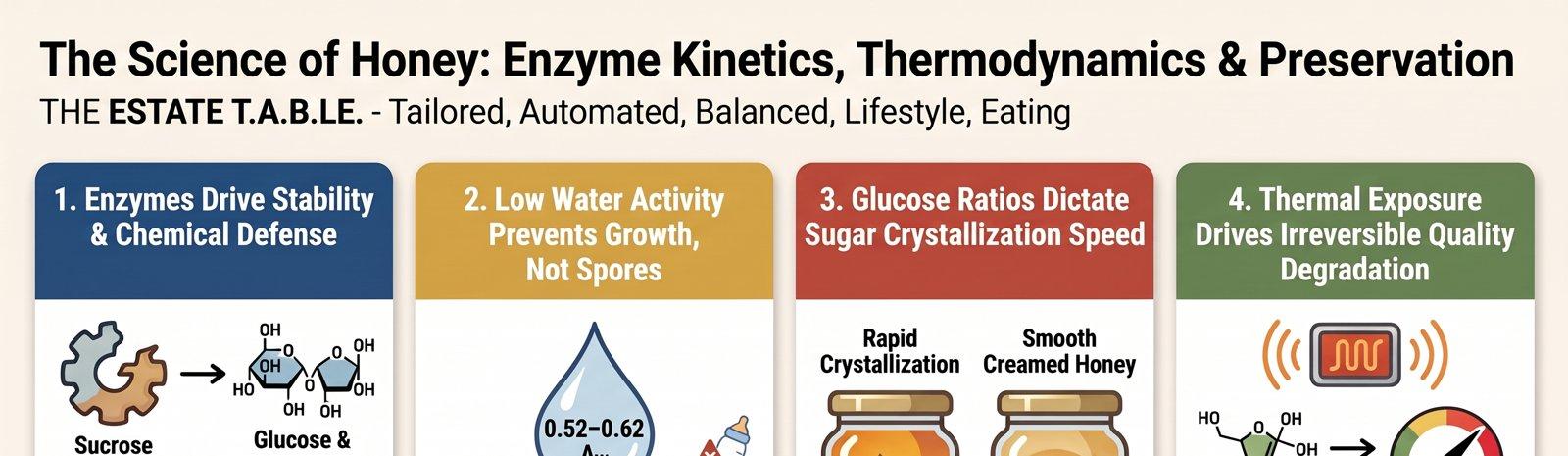
Bees turn thin nectar into a supersaturated sugar syrup with three enzymes and a lot of wing-fanning. This module follows the chemistry into the kitchen: why honey crystallizes and how the Dyce method makes it creamy, how heat builds HMF and strips enzymes, which honey mixtures need refrigeration, why fresh garlic or chiles in honey are a botulism hazard, and why an infant must never be given honey in any form. It then moves to mead: the nitrogen, osmotic and pH problems that stall a honey must, staged nutrients, buffering, a 5-liter orange blossom protocol, and the limits of home production, selling and gifting.
- Enzymatic Inversion
- Water Activity & Honey Stability
- Infant Botulism & Food Safety
- Crystallization & the Dyce Method
- HMF, Heat & Quality Limits
- Hot Honey & Infusion Hazards
- Mead Must Chemistry
- Staged Nutrients & pH Buffering
How many times have you followed a recipe to the letter and still not known why it worked, or why it didn't?
This module is the why. The guides, flashcards, quiz, audio, video and study materials are for members, with your progress saved to your account. Membership is $10 a month, or $80 a year ($40 less than paying monthly), plus any sales tax that applies. Cancel online, any time, in one click.
Not sure yet? Read the free module first: Modern Lipidology: The Full Picture on Heart Disease