Heat and Fire: The Science of Cooking Techniques
Water caps a wet surface at 212°F, so every technique is a decision about where heat enters and where the water goes
Members only · $10 a month
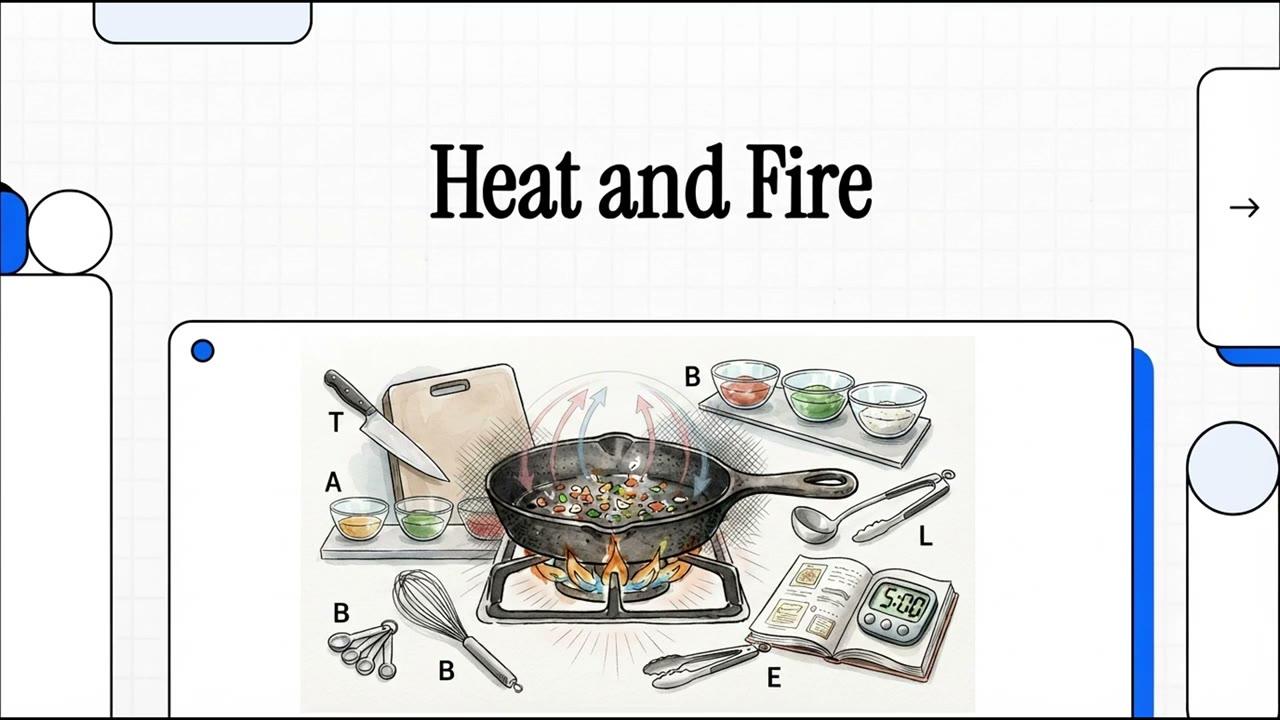
Searing, roasting, braising and live-fire cooking are four ways of moving heat into food, and each one is controlled by the same few physical facts: how energy travels (conduction, convection, radiation), how liquid water holds a surface at 212°F until it is gone, and where browning and collagen breakdown begin. This module turns those facts into working method: pan temperatures and fats for a sear, the reverse sear for thick cuts, oven strategies and airflow for roasting, the bare simmer and oven settings for a braise, and fuel, zones and smoke for open fire, with the USDA minimum temperatures, alcohol retention and cooling rules a cook has to respect. It also corrects six kitchen myths and ends with a decision matrix for choosing, and chaining, methods.
- Conduction, Convection & Radiation
- The 212°F Water Ceiling
- Maillard Browning & Caramelization
- Searing, Dry Brining & the Reverse Sear
- Roasting: Airflow, Racks & Skin
- Braising & Collagen Conversion
- Live Fire, Embers & the Seven Fires
- Six Kitchen Myths Corrected
How many times have you followed a recipe to the letter and still not known why it worked, or why it didn't?
This module is the why. The guides, flashcards, quiz, audio, video and study materials are for members, with your progress saved to your account. Membership is $10 a month, or $80 a year ($40 less than paying monthly), plus any sales tax that applies. Cancel online, any time, in one click.
Not sure yet? Read the free module first: Modern Lipidology: The Full Picture on Heart Disease