Gluten-Free Bread Science: Flours, Yeasted Loaves, Starters and Sourdough
Gluten does four jobs; a gluten-free loaf has to hand each one to a starch, a protein flour, a gel or the oven, and sourdough adds acid, enzymes and time
Members only · $10 a month
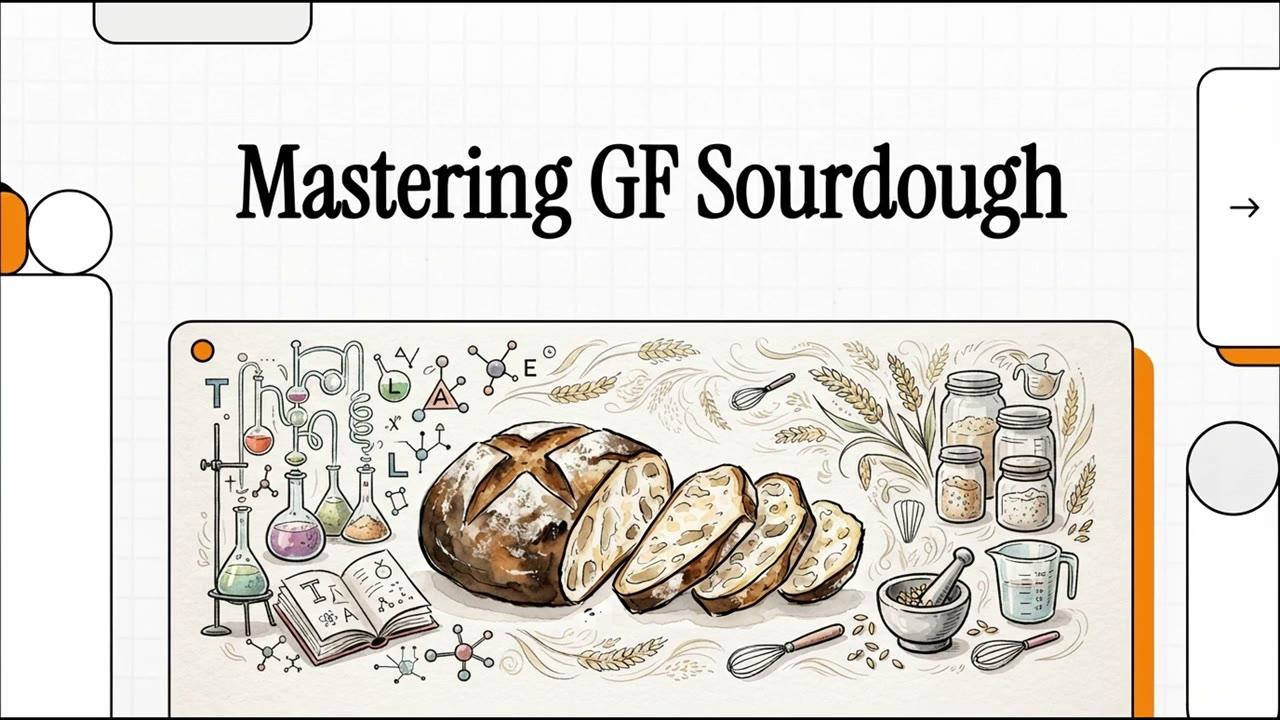
A four-part course on baking bread without gluten. Part 1 breaks gluten into its four jobs and rebuilds them with house flour blends, starches and a psyllium gel. Part 2 bakes single-proof yeasted loaves, rolls, focaccia and baguettes at 90 to 110 percent hydration. Part 3 grows and keeps a gluten-free sourdough starter, from the false rise on day 3 to a ten-day readiness test. Part 4 builds the sourdough loaf: levain, a short bulk, shaping, cold retard, baking in a Dutch oven and diagnosing the crumb. Every part includes the safety rules a private kitchen needs: the 20 ppm gluten-free labeling limit, cross-contact control, raw flour and starter handling, and a bake log.
- The Four Jobs of Gluten
- House Flour Blends & Starches
- Psyllium Gel & Binders
- Single-Proof Yeasted Bread
- Starter Establishment & Maintenance
- Levain, Bulk & Cold Retard
- Crumb & Crust Diagnostics
- Cross-Contact & Raw Flour Safety
How many times have you followed a recipe to the letter and still not known why it worked, or why it didn't?
This module is the why. The guides, flashcards, quiz, audio, video and study materials are for members, with your progress saved to your account. Membership is $10 a month, or $80 a year ($40 less than paying monthly), plus any sales tax that applies. Cancel online, any time, in one click.
Not sure yet? Read the free module first: Modern Lipidology: The Full Picture on Heart Disease