The Science of Charcuterie and Cured Meats
Why a cured ham can look and smell perfect and still be unsafe, and the numbers (salt, nitrite, pH, water activity, degree-hours) that make it safe
Members only · $10 a month
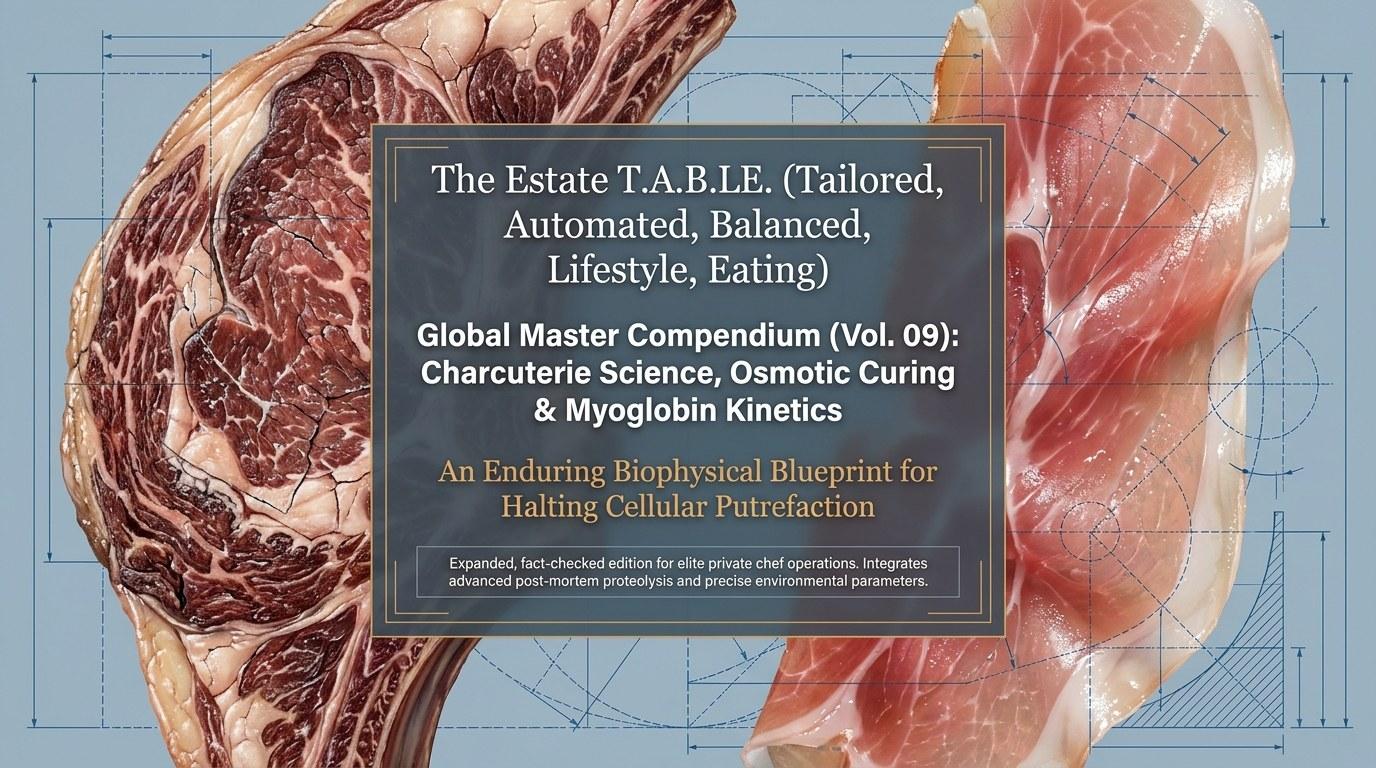
Dry curing, fermented salami and dry-aged beef all run on stacked barriers rather than on cooking. Salt pulls water out and moves in by diffusion, nitrite stops botulinum spores from growing out and fixes the pink color, lactic acid bacteria drop the pH, and drying lowers water activity until pathogens cannot grow. This module follows that chain with the real numbers (water activity limits, ingoing cure limits under 9 CFR 424.21, degree-hours, drying weight loss), compares six traditions from Parma ham to country ham, explains the enzymes that build flavor over months and years, and turns it into step-by-step protocols, a defect diagnostic matrix and the Food Code rules a private chef has to respect.
- Hurdle Technology & Water Activity
- Salt Diffusion & Osmotic Curing
- Cure #1, Cure #2 & Nitrite Limits
- Myoglobin Color Chemistry
- Fermentation & Degree-Hours
- Surface Molds & Smoke
- Dry-Aging Beef
- Protocols, Defects & Food Code Rules
How many times have you followed a recipe to the letter and still not known why it worked, or why it didn't?
This module is the why. The guides, flashcards, quiz, audio, video and study materials are for members, with your progress saved to your account. Membership is $10 a month, or $80 a year ($40 less than paying monthly), plus any sales tax that applies. Cancel online, any time, in one click.
Not sure yet? Read the free module first: Modern Lipidology: The Full Picture on Heart Disease