Cereal Science, Gluten Biophysics and Sourdough Ecology
How a wheat kernel, a living starter and a hot oven turn flour and water into a loaf, and what to measure at each step
Members only · $10 a month
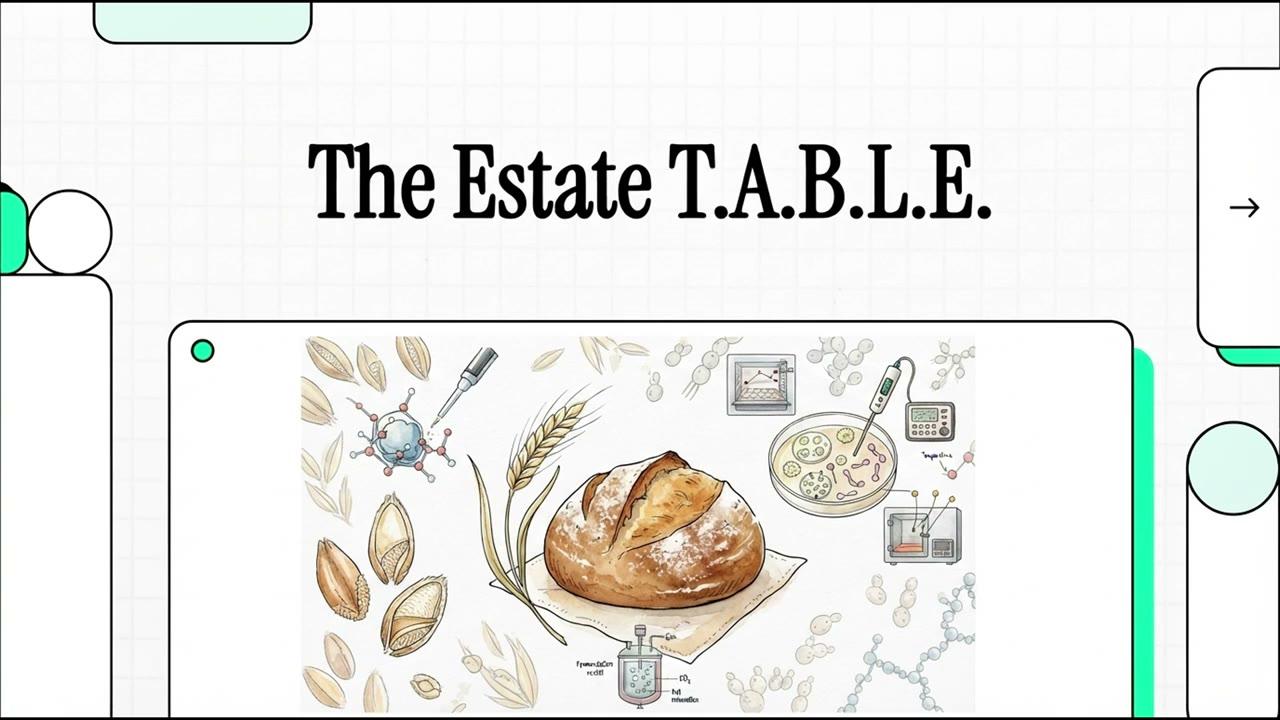
Flour is a biochemically active ingredient, not an inert powder. This module follows the wheat kernel from bran to endosperm, shows how gliadin and glutenin build a gluten network under water and shear, and explains how starch, amylase and the Falling Number decide how a dough ferments. It then opens the sourdough starter as an ecosystem of lactic acid bacteria and wild yeast, with the acid balance that shapes flavor and strength, and follows the loaf into the oven: gas cells, steam, gelatinization, crust browning, staling and storage. Standard procedures cover an 80% hydration country loaf and a butter croissant, a defect diagnostic matrix, raw flour safety, and why wheat sourdough is never gluten-free.
- Wheat Kernel & Flour Types
- Gluten Biophysics
- Starch & Falling Number
- Sourdough Microbial Ecology
- Acid Balance
- Gas Cells & Oven Spring
- Steam, Crust & Staling
- Raw Flour & Gluten Safety
How many times have you followed a recipe to the letter and still not known why it worked, or why it didn't?
This module is the why. The guides, flashcards, quiz, audio, video and study materials are for members, with your progress saved to your account. Membership is $10 a month, or $80 a year ($40 less than paying monthly), plus any sales tax that applies. Cancel online, any time, in one click.
Not sure yet? Read the free module first: Modern Lipidology: The Full Picture on Heart Disease